Digipath AI Test

Transform Your Lab into the Digital Pathology Era

The digital transformation of pathology represents a fundamental shift from traditional analog methods to cutting-edge digital workflows that enhance diagnostic accuracy, improve efficiency, and enable global collaboration. As healthcare systems worldwide embrace digital innovation, pathology laboratories must evolve to meet the demands of modern medicine and deliver superior patient care.

The Digital Pathology Revolution

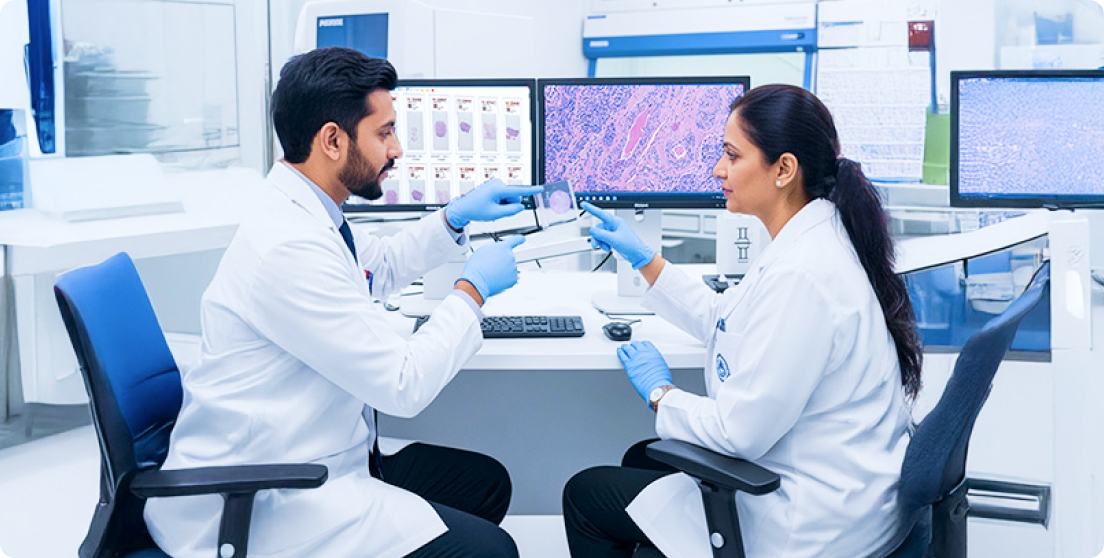
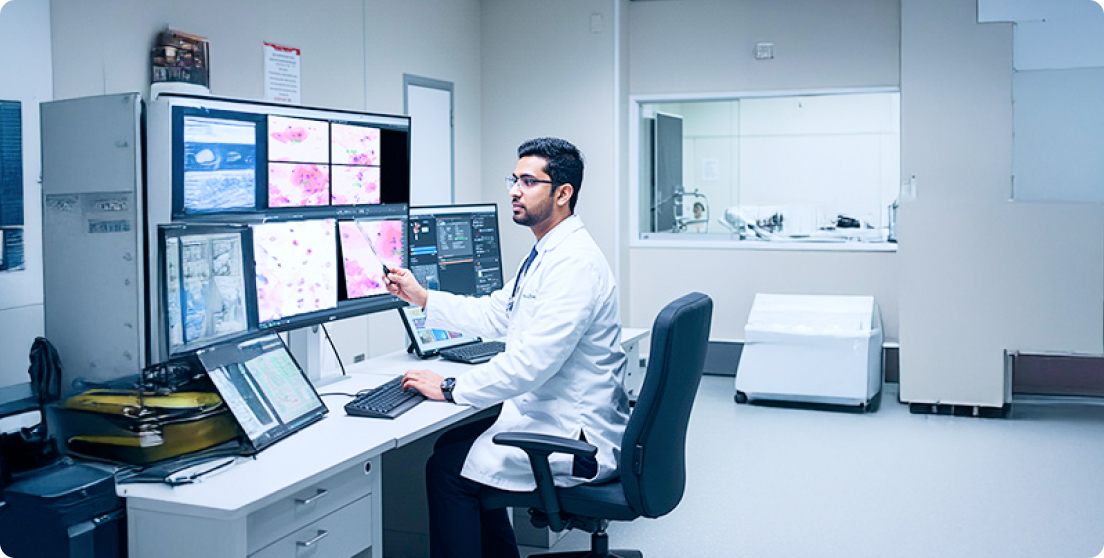
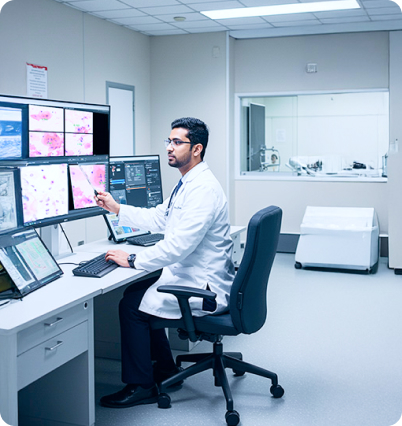
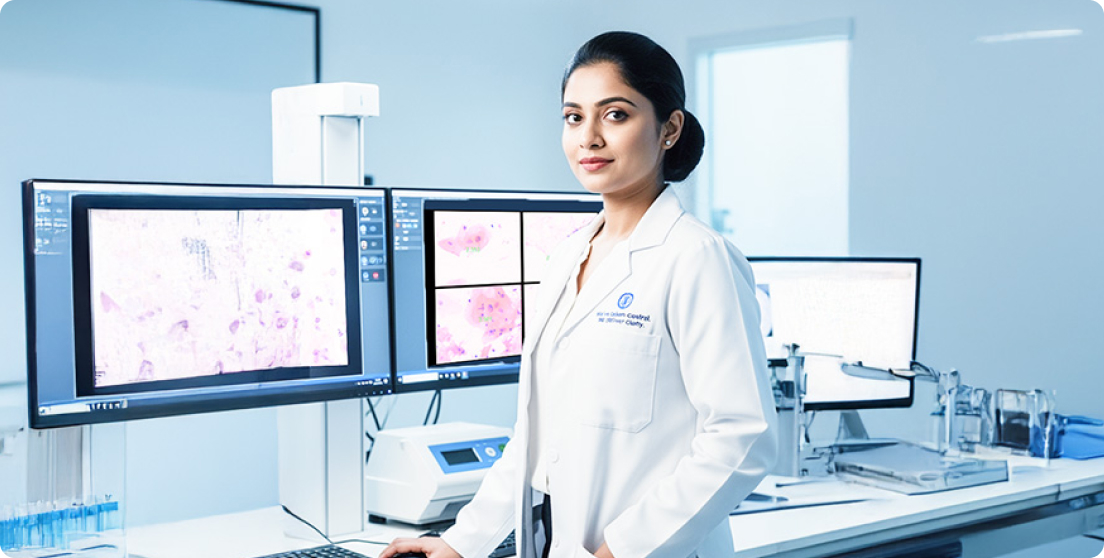
Digital pathology utilizes whole slide imaging (WSI) technology to convert traditional glass slides into high-resolution digital images that can be viewed, analyzed, and shared electronically. This transformation marks the dawn of a new era in diagnostics, where physical limitations give way to unlimited possibilities for collaboration, analysis, and innovation.

What Digital Pathology Offers

Whole Slide Imaging Scanners: Convert glass slides into high-resolution digital images

Digital Image Management Systems: Store, organize, and retrieve digital slides efficiently

Advanced Viewing Software: Enable detailed examination and analysis of digital slides

AI-Powered Analysis Tools: Assist pathologists with pattern recognition and diagnostic support

Cloud-Based Storage: Ensure secure, accessible data management

What Digital Pathology Offers

Enhanced Diagnostic Accuracy and Consistency

Automated Image Analysis: AI algorithms provide objective, quantitative analysis, reducing subjectivity and inter-observer variability

High-Resolution Imaging: Capture every detail with precision, enabling pathologists to detect subtle patterns invisible to traditional methods

Standardized Protocols: Ensure consistent quality across all diagnostic procedures

Advanced Measurement Tools: Provide precise quantification of cellular and tissue features

Streamlined Workflow Efficiency

Faster Turnaround Times: Digital slides can be accessed instantly, eliminating physical transportation delays

Reduced Diagnostic Time: Studies show 115 minutes shorter diagnostic times with digital pathology, enabling an additional 250 cases per year

Improved Productivity: Pathologists can review multiple slides simultaneously and switch between magnifications instantly

Automated Processes: Reduce manual handling and administrative tasks

Enhanced Collaboration and Remote Access

Global Consultation Networks: Connect with specialists worldwide for complex cases

Remote Diagnosis: Enable pathologists to work from any location, improving work-life balance

Real-Time Collaboration: Multiple pathologists can review and discuss cases simultaneously

24/7 Accessibility: Access digital slides anytime, anywhere for urgent cases

Superior Data Management and Storage

Long-Term Preservation: Digital slides never degrade, unlike physical slides that deteriorate over time

Secure Digital Archives: Protect valuable pathological data with robust backup systems

Easy Retrieval: Access historical cases instantly for comparison and research

Comprehensive Documentation: Maintain detailed records with annotations and measurements

Specialized Applications Cancer Diagnostics and Research

Oncology Excellence:

Enhance tumor grading and staging accuracy

Improve biomarker detection and quantification

Enable precision medicine approaches

Support clinical trial participation

Economic Impact and Cost Savings

Operational Savings:

Eliminate costs associated with glass slide production and storage

Reduce physical transportation expenses


Minimize slide breakage and replacement costs

Decrease administrative overhead


Resource Optimization:

Maximize pathologist productivity and efficiency

Reduce laboratory space requirements


Optimize equipment utilization


Minimize reagent waste


long term financial benefits

Strategic Advantages:

Attract and retain top talent with advanced technology

Expand service offerings to new markets


Increase laboratory capacity without physical expansion

Generate revenue through consulting services

The Future of Digital Pathology Emerging Technologies

Next-Generation Innovations:

Advanced AI algorithms for automated diagnosis

Multi-modal imaging capabilities

Real-time molecular analysis integration

Portable scanning technologies

Personalized Medicine:

Integration with genomic data for precision diagnostics

Predictive analytics for treatment planning

Biomarker discovery and validation

Targeted therapy selection

The transformation to digital pathology is not just an upgrade—it’s a fundamental reimagining of how pathology laboratories operate, collaborate, and deliver patient care. With enhanced diagnostic accuracy, streamlined workflows, and unprecedented collaboration capabilities, digital pathology represents the future of diagnostic medicine.
The evidence is overwhelming: laboratories that embrace digital transformation experience reduced turnaround times, improved diagnostic accuracy, and enhanced collaboration capabilities. As the field continues to evolve, early adopters will gain competitive advantages in recruitment, efficiency, and service delivery.
The digital pathology era is here. The question is not whether to transform your laboratory, but how quickly you can embrace this revolutionary technology to deliver superior patient care and position your institution for future success.