Digipath AI Test

Prevent oral Cancer The Silent EPIDEMIC

Oral cancer is a devastating disease that affects millions worldwide, yet it remains one of the most preventable forms of cancer. More than 480,000 new cases of oral and throat cancers are diagnosed each year globally, with over 35,000 cases in the United States alone. This disease kills one person every hour in the U.S., making early detection and prevention absolutely critical.

In India, the situation is particularly alarming. Oral cancer is the third most common cancer in men, with high incidence rates and late-stage diagnosis being the norm. Unlike many other cancers, oral cancer develops slowly over years, giving us a crucial window of opportunity for prevention and early detection.


Why Prevention Matters More Than Ever

The Current Crisis

High mortality rates:

Approximately 80% of oral cancer cases are detected at stages 3 and 4, leading to costly treatments and higher mortality rates

Economic devastation:

Late-stage oral cancer treatment is 5-10 times more expensive than early detection, straining healthcare budgets

Limited screening:

No organized public screening programs exist for oral cancer, and awareness remains low

Missed opportunities:

11.1% of oral lesions are missed under white light examination, leading to delayed diagnosis

The Prevention Opportunity

When detected early, oral cancer has a survival rate of 80-90%. Early-stage cancer treatment is 10 times cheaper than late-stage care, making prevention not just a health imperative but an economic necessity.

Understanding Risk Factors

Primary Risk Factors

Tobacco use: Smoking tobacco is the number one risk factor for oral cancer, with smokers having a 5-10 times higher chance of dying from oral cancer

Excessive alcohol consumption: Heavy alcohol use multiplies cancer risk by 30 times when combined with tobacco

HPV infection: Human papillomavirus, particularly HPV16, is strongly associated with oropharyngeal cancers

Poor oral hygiene: Neglecting dental care increases risk significantly

Secondary Risk Factors

Age and gender: Men over 50 are at highest risk, though cases in women are increasing due to HPV connection

Excessive sun exposure: Particularly for lip cancers

Genetic predisposition: Family history of oral or other cancers

Diet: Poor nutrition and lack of fruits and vegetables

Advanced Screening Technology:
DNA Ploidy Testing Revolutionary Accuracy

Traditional screening methods often fall short:

  • Visual examination: Misses 11.1% of lesions under white light
  • Conventional methods: Limited sensitivity and specificity

DNA Ploidy testing offers breakthrough accuracy:

  • 98% sensitivity and 100% specificity
  • Detects cancer up to 2 years before conventional methods
  • Non-invasive brush collection: Painless and widely accepted

VELscope Vx:
See What’s Invisible

DETECT ORAL CANCER EARLY WITH VELSCOPE Vx: ​Visualize LESIONS DEVELOPING IN THE STROMA BENEATH THE MUCOSA invisible to naked eye​

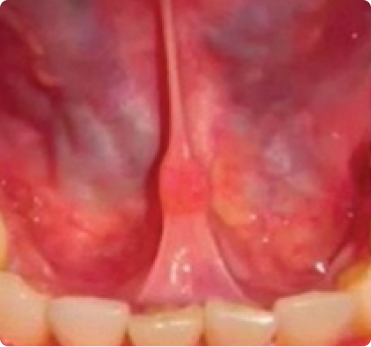
EARLY LESIONS DEVELOPING IN THE STROMA ARE NOT VISIBLE UNDER WHITE LIGHT​

11.1% oral lesion are missed under white light
Undetectable by the unassisted eye

Detect lesions developing under the mucosa, enabling early detection of oral cancer

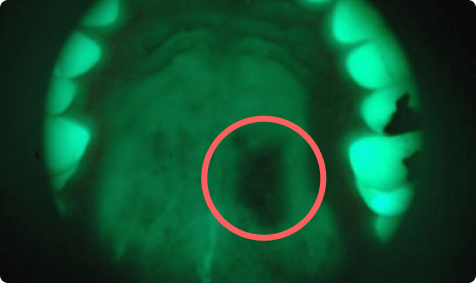
In the presence of dysplasia or tumors, the collagen matrix breaks down, leading to a decrease in fluorescence and it appears dark.

ELIMINATE ORAL BIOPSY SAMPLING ERRORS: ESSENTIAL FOR ACCURATE DIAGNOSIS AND EFFECTIVE TREATMENT PLANNING​

PRECISE BIOPSY SITES ARE CHALLENGING TO IDENTIFY UNDER WHITE LIGHT​

60% Discordance due to sampling errors

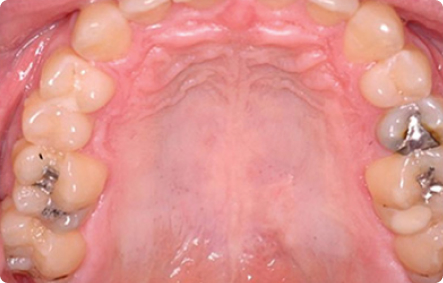
The extensive area of leukoplakia under white light makes identifying the exact biopsy site challenging.​

fluorescence visualization helps in identifying appropriate sites for biopsy

Biopsy Discordance rate goes to zero

Loss of fluorescence highlights areas of concern (two distinct dark regions as observed under VELscope). ​
Biopsy of these areas revealed moderate dysplasia.​

​PRECISION SURGERY WITH VELSCOPE Vx: ​
REDUCING ORAL CANCER RECURRENCE BY UP TO 90%​

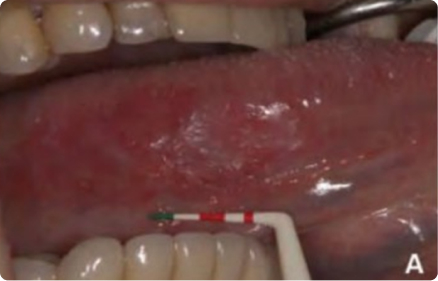
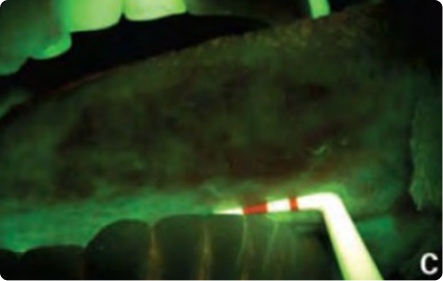
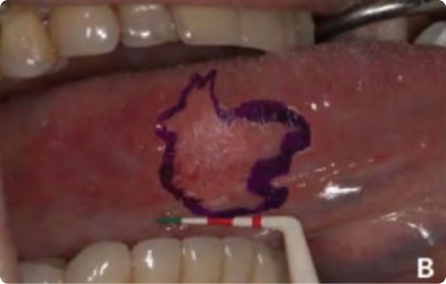
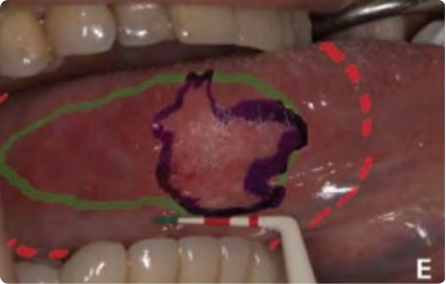
Initial assessment of an ill-defined SCC on the right ventrolateral tongue under white light.

Assessment of field using FV in the dark​.

Clinically apparent tumor outlined in blue​.

FVL area outlined in green, with the boundary of the surgical specimen marked in red.​

MONITORING TREATMENT SITES WITH VELSCOPE AND DNA PLOIDY: EARLY DETECTION OF RECURRENT ORAL CANCER​

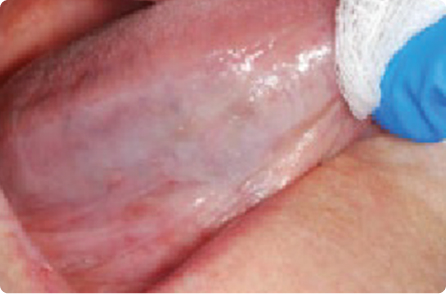
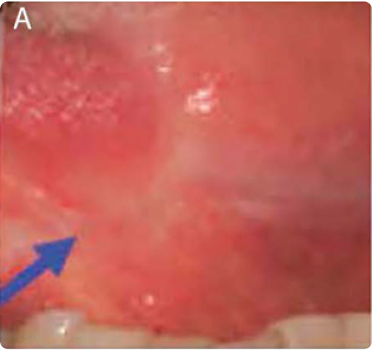
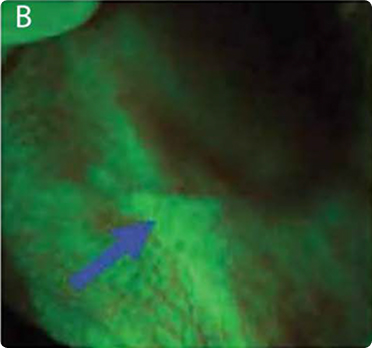
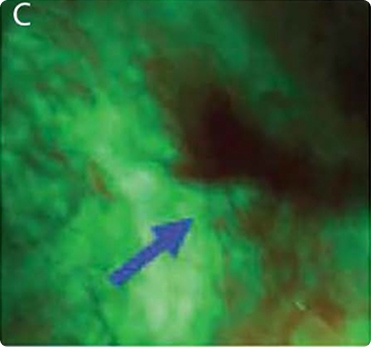
Image A: White-light image of a well-healed scar from squamous cell carcinoma (SCC) on the left lateral tongue.​

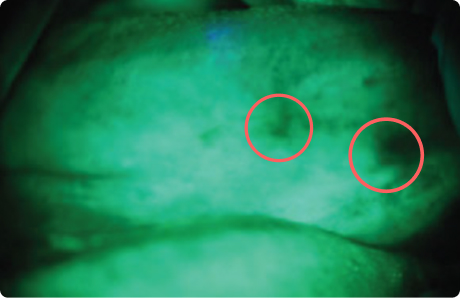
Image B: The anterior aspect of the same scar under fluorescence visualization, showing a dark brown area of fluorescence loss.​

Image C: Follow-up after 12 months, with the same area exhibiting a persistent and enlarged loss of fluorescence. After 20 months, a biopsy from the region of fluorescence loss was diagnosed as carcinoma in situ.​

ACCURATE VISUALIZATION & EFFECTIVE COMMUNICATION​ FOR PERSONALIZE INFECTION TREATMENT​

White Light Examination


Under VELscope

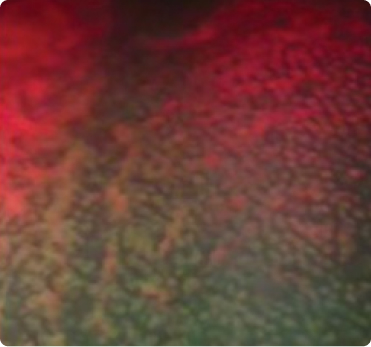
Bacterial infections appear red

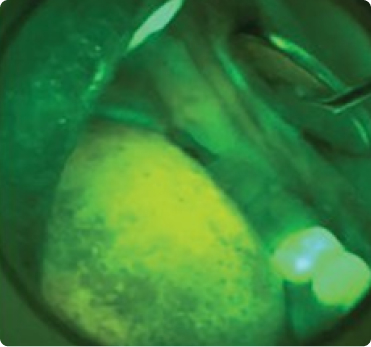
Yeast infections appear yellow/orang


Porphyrins, byproducts of bacterial metabolism, absorb the VELscope’s blue light and re-emit it as red autofluorescence.​

Yeast cells contain molecules that fluoresce yellow or yellow-orange under VELscope

Early Detection Saves Lives and Money

Financial Impact of Early Detection

Stage 1 treatment: Approximately $1,000

Stage 4 treatment: Over $12,000

Early intervention: Reduces hospitalization and extensive treatment needs

Treatment Outcomes by Stage

Pre-cancer/Stage 1:
Over 90% survival rate

Stage 2: 85% survival rate

Stage 3: 68% survival rate

Stage 4: 42% survival rate

Oral cancer prevention is not just possible—it’s essential. With advanced screening technologies like DNA Ploidy testing and VELscope visualization, over 90% of cases can be detected at pre-cancer or Stage 1, when treatment is most effective and affordable.
The choice is clear: We can continue to lose lives to a preventable disease, or we can take action now to save lives, reduce suffering, and protect families from devastating health and financial consequences.