Digipath AI Test

DNA Ploidy Test—Learn How It Works

Oral cancer recurrence is a devastating reality that affects up to 40% of patients who undergo conventional surgical treatment. However, breakthrough technology is now changing these statistics dramatically. With advanced fluorescence visualization and DNA ploidy testing, we can reduce oral cancer recurrence rates from 40% to as low as 6.5%, representing a game-changing advancement in oral cancer care.

Understanding DNA Ploidy: The Cellular Foundation

What is DNA Ploidy?

DNA ploidy refers to the amount of DNA content in a cell’s nucleus. In normal, healthy cells, DNA content follows

Diploid cells (2n): Contain two sets of chromosomes, the normal state for most human cells

Aneuploid cells: Have abnormal DNA content—either too much or too little—indicating cellular dysfunction

Tetraploid cells (4n): Contain four sets of chromosomes, often seen in dividing cells

The Cancer Connection

Aneuploidy is the hallmark of cancer. When cells become malignant, they lose their ability to properly regulate DNA replication and chromosome distribution. This leads to:

Abnormal DNA quantities in cell nuclei

Chromosomal instability that drives cancer progression

Cellular dysfunction that can be detected before visible symptoms appear

How DNA Ploidy Testing Works: Step-by-Step Process

Step 1: Non-Invasive Sample Collection

The process begins with simple brush collection:

Painless procedure: A soft brush gently collects cells from the target area

No discomfort: Patients experience no pain or bleeding during collection

High compliance: Widely accepted by patients, including anxious individuals

Quick collection: Takes less than 30 seconds to complete

Step 2: Advanced Cell Preparation

Collected cells undergo sophisticated preparation:

Feulgen staining process: Cells are treated with specialized stains that bind specifically to DNA

Monolayer preparation: Cells are arranged in a single layer to prevent overlapping

Quality optimization: Blood, mucus, and debris are removed for clear analysis

Microscope slide creation: Thousands of stained cell nuclei are prepared on glass slides

Step 3: Whole Slide Imaging

Collected cells undergo sophisticated preparation:

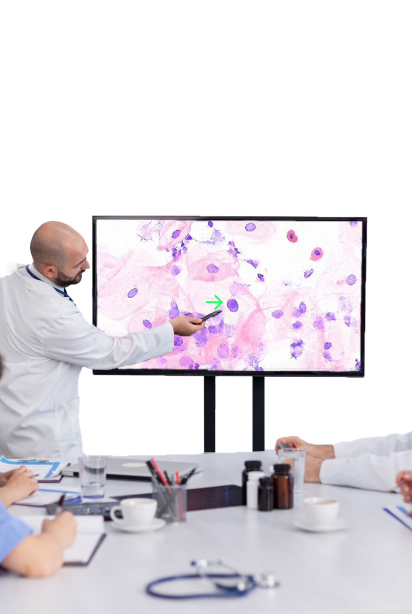
High-resolution imaging: Advanced whole slide imaging scanners digitize the entire slide

Complete coverage: Every cell on the slide is captured with microscopic precision

Digital archiving: Images are stored digitally for analysis and future reference

Quality assurance: Automated systems ensure consistent, high-quality imaging

Step 4: AI-Powered Analysis

Cutting-edge artificial intelligence analyzes each individual cell:

High-resolution image capture: Each cell nucleus is photographed in detail

Integrated Optical Density (IOD) calculation: Measures the amount of stain bound to DNA

DNA content measurement: Quantifies the exact DNA content in each cell

DNA Index assignment: Assigns a numerical value representing DNA content

Cell classification: Determines if the cell is normal, cycling, or aneuploid

Step 5: Automated Results Generation

The system generates comprehensive, objective results:

Quantitative analysis: Every cell is counted and measured

Statistical evaluation: DNA content distribution is analyzed

Histogram generation: Visual representation of cellular DNA patterns

Automated reporting: Standardized reports with clear recommendations

DNA Index Classification System

Normal Cells (DNA Index 1.0-1.25)

Diploid cells: Standard DNA content for healthy cells

Stable genetics: Normal chromosome number and structure

No cancer risk: Cells functioning normally

Cycling Cells (DNA Index 1.25-2.5)

Dividing cells: Normal cells in the process of division

Temporary state: Cells preparing for mitosis

Monitored closely: May indicate increased cellular activity

Aneuploid Cells (DNA Index >2.5)

Abnormal DNA content: Significantly altered genetic material

Cancer biomarker: Strong indication of malignant transformation

Requires action: Immediate follow-up and further investigation needed

Artificial Intelligence Integration

The DNA ploidy system incorporates sophisticated AI algorithms:

Pattern recognition: Identifies subtle abnormalities invisible to human observers

Objective analysis: Eliminates subjective interpretation and observer bias

Continuous learning: AI improves accuracy through experience

Quality control: Automated flagging of suspicious cells for pathologist review

Comprehensive Cell Analysis

Every cell undergoes complete evaluation:

Morphological assessment: Cell size, shape, and structure

DNA quantification: Precise measurement of genetic material

Statistical analysis: Population-based cellular behavior patterns

Trend identification: Detection of progressive cellular changes

Clinical Applications and Benefits

Screening Applications Early Detection Programs:

Asymptomatic screening: Detect cancer before symptoms appear

High-risk monitoring: Special surveillance for at-risk populations

Community screening: Cost-effective mass screening programs

Routine health checks: Integration into regular medical examinations

Diagnostic Applications Enhanced Accuracy:

Suspicious lesion evaluation: Objective assessment of concerning areas

Biopsy guidance: Improved targeting of tissue sampling

Differential diagnosis: Distinguish between benign and malignant changes

Staging assistance: Assess extent of cellular abnormalities

Treatment Planning Optimized Care:

Baseline establishment: Pre-treatment aneuploidy levels

Treatment selection: Personalized therapy based on cellular behavior

Margin assessment: Surgical planning with molecular guidance

Prognosis evaluation: Predict treatment response and outcomes

Post-Treatment Monitoring Recurrence Prevention:

Molecular surveillance: Detect recurrence at cellular level

Non-invasive follow-up: Comfortable monitoring for patients

Early intervention: Prompt treatment of detected abnormalities

Long-term tracking: Comprehensive survivor care

Advantages Over Conventional Methods

Superior Accuracy Compared to Traditional Methods:

AP smears: 64-87% sensitivity vs. 98% for DNA ploidy

Visual inspection: Limited to surface abnormalities vs. cellular-level detection

HPV testing: 84.6% specificity vs. 100% for DNA ploidy

Conventional cytology: Subjective interpretation vs. objective quantification

Objective Results Eliminates Human Error:

Quantitative measurements: Precise numerical data

Automated analysis: Consistent results regardless of operator

Statistical validation: Robust analytical methods

Quality assurance: Built-in error detection and correction

Patient Benefits Enhanced Experience:

Non-invasive procedure: No discomfort or anxiety

Rapid results: Analysis completed within 24 hours

High compliance: Patients readily accept testing

Peace of mind: Objective, accurate results

DNA ploidy testing represents a revolutionary advancement in cancer detection, offering 98% sensitivity and 100% specificity in identifying cellular abnormalities that indicate cancer risk. This technology detects cancer up to 2 years before conventional methods, providing unprecedented opportunities for early intervention and prevention.
The process is simple yet sophisticated: non-invasive brush collection, advanced cell preparation, high-resolution imaging, AI-powered analysis, and automated reporting combine to deliver the most accurate cancer screening available today.
The power to detect cancer at its earliest stages is now available. With DNA ploidy testing, we can shift from reactive treatment to proactive prevention, saving lives and reducing the devastating impact of cancer on individuals and families.